Marine Biology
Whale Sharks
The whale shark for divers — the largest fish in the world, a gentle plankton filter feeder, its unique spot pattern and citizen science, encounter etiquette, and why Tofo is world-class.
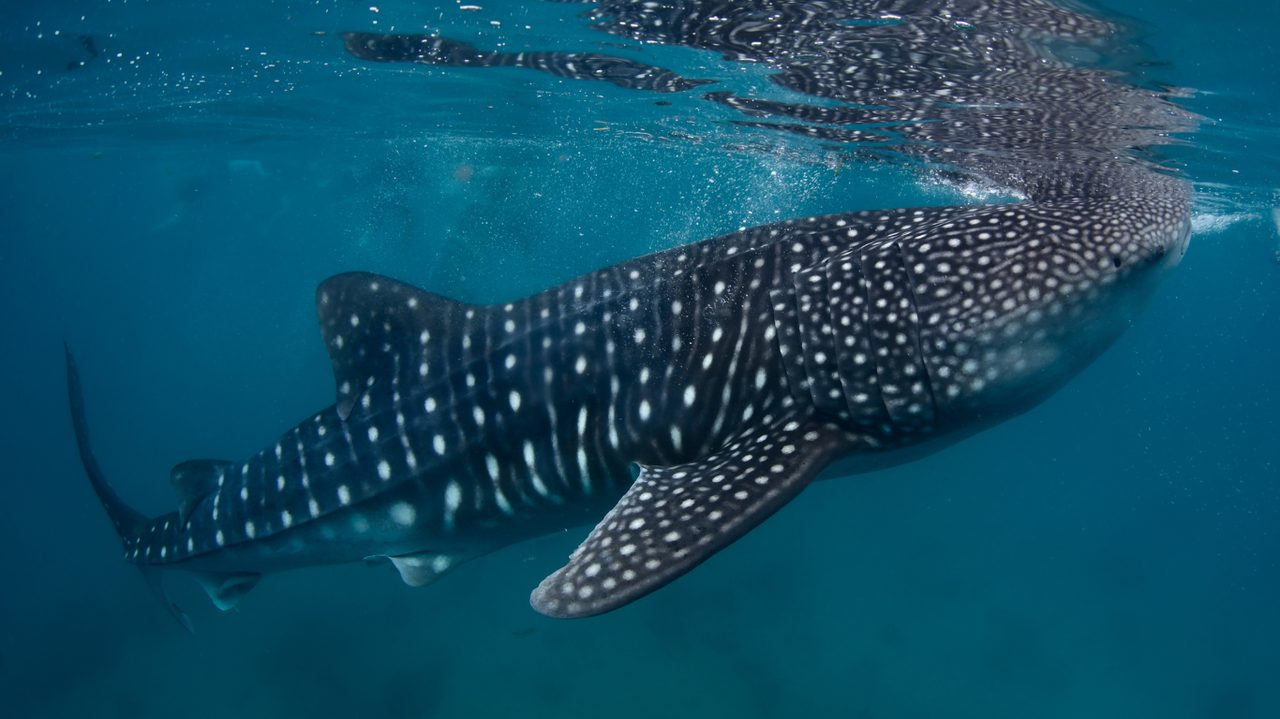
The largest fish in the world is one of the gentlest animals in the sea. The whale shark, up to nearly twenty metres long and yet a patient plankton filter feeder, is for many divers and snorkellers the encounter of a lifetime. And Tofo (Mozambique) is one of the best places on Earth to see it.
The name is misleading: the whale shark is called that because it is as big as a whale, but it is a true shark, and therefore a fish, not a mammal. It is the largest fish alive today, with measured specimens up to about eighteen to nineteen metres, though most animals you see are "only" five to ten metres. And despite that enormous size it is entirely harmless: like the manta ray and the great baleen whales, it lives on plankton, which it filters from the water with a huge, wide-opening mouth.
For divers and snorkellers, seeing a whale shark is an emotional experience. Swimming beside an animal the size of a bus, moving calmly and unfazed through the blue, puts your own place in the ocean into perspective. The encounter often happens snorkelling at the surface, because whale sharks like to feed where the plankton is, and that is often near the light.
Fish or whale? The name deceives. The whale shark is a shark (a cartilaginous fish): it breathes through gills, has a vertical tail fin that moves side to side, and is cold-blooded. The true whales are mammals that breathe air and move a horizontal tail up and down. "Whale shark" refers only to its size, not its family. Remember: it is the largest fish, not the largest whale.
Key concepts
| Term | Short definition | Why it matters |
|---|---|---|
| Largest fish | The whale shark is the largest living fish | Unique, impressive, vulnerable |
| Filter feeder | Feeds on plankton from the water | Entirely harmless; follows the food |
| Cartilaginous fish (shark) | Skeleton of cartilage, gill-breathing | A fish, not a mammal |
| Spot pattern | Unique dot pattern on the skin | Individual identification ("fingerprint") |
| Plankton/upwelling | Nutrient-rich water | Determines where and when you see it |
| Aggregation | A group of whale sharks at a feeding spot | Predictable encounter spots |
| Endangered | The IUCN status of the species | Protection is urgent |
| Citizen science | Photos from divers help research | Protects the animal and the experience |
Understanding whale sharks
What the whale shark is: a gentle giant
The whale shark is a shark, and therefore a cartilaginous fish, but it has nothing of the hunter image. It is a filter feeder: it swims slowly with a wide-open mouth through plankton-rich water, takes in enormous amounts of water, and filters out plankton, fish eggs, krill and small schooling fish with filter structures by its gills. It can process large volumes of water per hour. Its little teeth are numerous but barely functional; it does not bite, it sieves. Its head is broad and flattened with the mouth at the front (unlike most sharks, where the mouth is under the snout), suited to taking in water straight ahead. It moves slowly and evenly, and in an encounter is usually imperturbably calm. That very calm makes it so beloved, and at the same time vulnerable: it does not flee quickly from boats or nets.
The spot pattern: a unique fingerprint
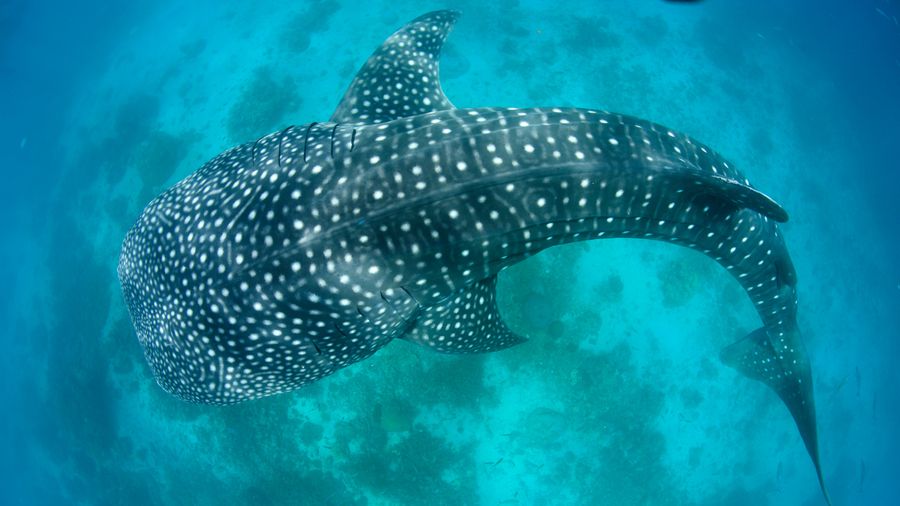
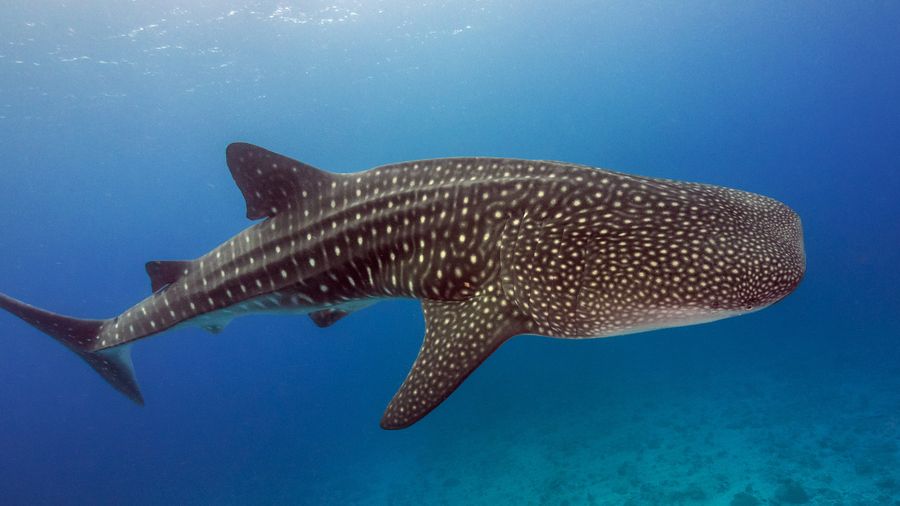
Every whale shark carries a unique pattern of light spots and stripes on its dark skin, and that pattern is different for each individual, like a fingerprint. Researchers photograph the spots behind the gills and use recognition software (partly developed from star-map technology) to identify and track individual animals through the years and across the oceans. This has shown that whale sharks travel enormous distances and that some individuals return to the same feeding spots year after year. As a diver you can contribute: a good photo of the flank behind the gills can help researchers.
Where and why you find it: following the plankton
The whale shark follows its food, and therefore the plankton. Where upwelling and current bring nutrient-rich water to the surface, the plankton blooms, and there the whale sharks gather, sometimes in aggregations of dozens of animals. That makes their appearance surprisingly predictable: certain places have reliable whale shark seasons, tied to plankton blooms, coral spawning or fish schools. This also explains why you often meet it snorkelling at or near the surface: that is where, in the sunlight, most of the plankton is. Looking for a whale shark, you are in effect looking for a plankton-rich spot in the right season. The biggest animal follows the smallest food.
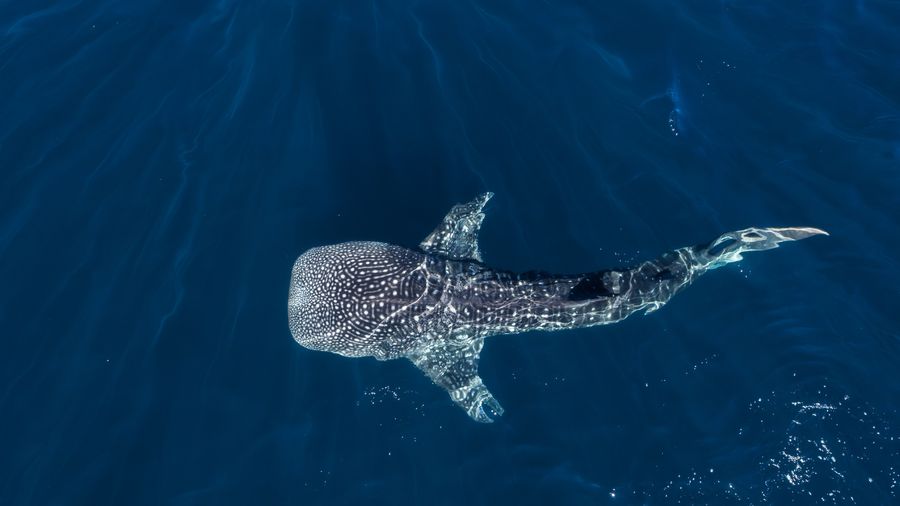
Scenario. A snorkeller in Tofo (Mozambique) goes by boat to search along the coast where the water is plankton-rich. The spotter sees the characteristic broad, spotted back just below the surface, and the group slides calmly into the water at some distance. The whale shark swims on unfazed, filtering, and the snorkellers swim alongside at a respectful distance. Ten minutes later the animal dives away. An encounter that could happen precisely because the boat had found the plankton (and thus the shark).
Responsible behaviour in an encounter
Because the whale shark is large, slow and endangered, and encounters are popular, there are clear behaviour rules. The exact distances and rules vary by country, but the principles are the same everywhere: keep your distance (often several metres to the side and more at the tail); never approach head-on or block the way. Stay beside or slightly behind the animal, not above it (which may prevent it from surfacing to plankton) and not in front. Never touch and never try to hitch a ride; it damages its mucus layer and is stressful and often illegal. No flash right in the face, and keep your swimming calm. Limit group size and time per local rules, and let the animal set its own pace and direction. Choose a responsible, certified operator that follows these rules. These rules protect not only the animal but also the quality of the experience: an unchased whale shark stays calm and nearby far longer.
Citizen science: your photo counts
The whale shark is one of the finest examples of "citizen science": researchers depend on photos taken by divers and snorkellers. A sharp photo of the flank behind the gills, with the spot pattern visible, can be uploaded to global databases (where recognition software identifies the individual). This helps map how whale sharks migrate, where they return, and how the population is doing. In a responsible encounter you therefore contribute not only to your own memory but to the science and conservation of the species.
Did you know? The software that recognises whale sharks by their spots is partly based on an algorithm originally developed to match stars on astronomical photos. The "constellation" of spots on each whale shark's flank is unique enough to identify an individual, just like a star map.
Threats and conservation
The whale shark has been on the IUCN Red List as Endangered since 2016: the global population has declined sharply in recent decades. The main threats: ship strikes (because it swims slowly and just below the surface, it is vulnerable to shipping); bycatch and targeted fishing (in some regions whale sharks are or were hunted; elsewhere they get entangled in nets); plastic and microplastic (a filter feeder inevitably takes in plastic particles too); irresponsible tourism (too many boats, too close, touching and chasing disturb behaviour and can cause injury); and slow reproduction (like other sharks, the whale shark grows and reproduces slowly, so populations recover slowly). Protection works through international agreements, protected areas, regulated tourism and research. Responsible whale shark tourism, such as around Tofo, makes the animal economically valuable as a living creature and often directly funds the research and conservation.
Real-world examples
The Netherlands. Whale sharks do not occur here; it is a tropical and subtropical species. It underlines that you travel to warmer water for this encounter.
Egypt (Red Sea). Whale sharks appear seasonally and irregularly, often tied to plankton blooms; a beloved but less predictable encounter than at the classic aggregation spots.
Indonesia (e.g. Cenderawasih Bay, West Papua). Known for whale sharks that hang around fishing platforms (bagans) and filter plankton and fish scraps there, giving very reliable, almost year-round encounters. Also a place where the balance between tourism and protection needs attention.
Maldives. Reliable whale shark populations (e.g. around South Ari Atoll), where research and regulated tourism go together; a good place for citizen science and responsible encounters.
Mozambique (Tofo and Vilanculos). Tofo is one of the best places in the world for whale sharks: the plankton-rich waters, fed by the Agulhas Current and upwelling, attract them, partly year-round with seasonal peaks, and most encounters are snorkelling from the boat. Tofo is also an internationally important whale shark research centre, where individuals are identified by their spots and where divers contribute through photos to citizen science. At Vilanculos and the Bazaruto Archipelago whale sharks occur too, often in the warmer months. For both: responsible operators, respect for the distance, and your photos that can help the research.
Common mistakes
| Mistake | What goes wrong | How to avoid it |
|---|---|---|
| Touching a whale shark or hitching a ride | Damages the mucus layer, stress, often illegal | Watch and swim alongside at a distance; never touch |
| Swimming in front of or above the animal | Blocks the route, disturbs feeding | Stay beside or slightly behind, not in front or above |
| Coming too close (under the distance) | Disturbance, possible injury to the animal | Keep the local distance rules |
| Flash right in the face | Disturbance | Moderate photography; no light in the eyes |
| Irresponsible operator/too many boats | A chased animal, a short encounter | Choose a certified, responsible operator |
| Treating it as a "whale" (mammal) | Wrong understanding | Remember: it is the largest fish (shark), not a mammal |
| Not taking a photo for research | Missed contribution to citizen science | Photograph the flank behind the gills (from a distance) |
Pro tips
- Look for the plankton and you find the whale shark: plankton-rich water in the right season is the key.
- Stay beside or slightly behind the animal, never in front or above, and let it set its pace and direction.
- Keep the local distance rules and never touch; a respectful encounter lasts far longer.
- Take a sharp photo of the flank behind the gills (from a distance) and contribute to citizen science.
- Choose a responsible, certified operator; they know the rules and often support the research.
- Remember it is the largest fish, not a whale; that helps you understand its behaviour.
Frequently asked questions
Why is the name "whale shark" misleading, and what is the animal really? The name refers only to the size. The whale shark is a true shark (a cartilaginous fish), so a fish, not a mammal like the whales. It breathes through gills and has a vertical, side-moving tail.
How does the whale shark feed, and why is it harmless? It is a filter feeder: it swims with an open mouth through plankton-rich water and sieves out plankton, fish eggs, krill and small fish with filter structures by its gills. It does not bite or hunt, so it is entirely harmless to people.
What is the whale shark's spot pattern for? Each animal has a unique spot pattern, like a fingerprint. Researchers photograph it (behind the gills) and identify individual animals with recognition software to track them; divers contribute through citizen science.
Why do you often find whale sharks snorkelling at the surface? Because they follow the plankton, which concentrates near the surface in the sunlight, fed by upwelling and current. Where the plankton is, the whale shark is.
How do you behave in a whale shark encounter? Keep the local distance, stay beside or slightly behind the animal (never in front or above), don't touch and don't hitch a ride, swim calmly, moderate your photography, and let the animal set its pace and direction. Choose a responsible operator.
Summary
The whale shark is, despite its name, a true shark and therefore a fish, not a mammal: it is the largest living fish, with measured specimens up to about eighteen to nineteen metres, though most animals are five to ten metres. It is entirely harmless, because it is a filter feeder that sieves plankton, fish eggs, krill and small fish from the water and processes large volumes per hour. Each animal carries a unique spot pattern that serves as a fingerprint, with which researchers, helped by photos from divers (citizen science), identify and track individuals worldwide. Because the whale shark follows the plankton, you find it where upwelling and current bring nutrient-rich water to the surface, often snorkelling and in seasonal aggregations. Encounters happen under clear rules: keep your distance, stay beside or slightly behind the animal (never in front or above), don't touch, and let it set its own pace. The species has been Endangered on the IUCN Red List since 2016, with ship strikes, bycatch, plastic and irresponsible tourism as the main threats; responsible tourism and research help protect it. Tofo (Mozambique) is one of the best whale shark places in the world and an important research centre, where your respectful encounter and photos directly contribute to science.
The 10 things every diver should know by heart
- The whale shark is the largest fish (a shark), not a whale/mammal.
- It is a filter feeder and entirely harmless; it sieves plankton, it doesn't bite.
- Each animal has a unique spot pattern that serves as a fingerprint for identification.
- It follows the plankton; look for plankton-rich water in the right season.
- Encounters are often snorkelling at the surface, where the plankton is.
- Stay beside or slightly behind the animal, never in front or above; never touch.
- Keep the local distance rules and choose a responsible operator.
- Your flank photo helps the science (citizen science, individual ID).
- The species has been Endangered since 2016; ship strikes, bycatch, plastic and tourism threaten it.
- Tofo is one of the best places in the world and an important research centre.
Gallery