Marine Biology
Venomous Marine Animals
Venomous sea creatures for divers — venomous versus poisonous, stonefish and lionfish, cone snails, blue-ringed octopus, jellyfish, and the first aid that differs by animal.
The sea is full of animals with venom, but almost no incident happens to a diver who follows one simple rule: touch nothing. Venom is almost always defence, not attack. This topic teaches you to recognise the dangerous animals, why they have venom, and how to prevent and treat a sting or bite.
The underwater world has an impressive arsenal of venom: fish with venomous spines, a snail with a deadly harpoon, jellyfish with millions of microscopic "darts", and a small octopus with enough venom to kill people. It sounds frightening, but perspective matters: virtually all these animals use their venom for defence, not to attack you. They sting or bite only when you touch them, step on them or corner them. The vast majority of venom incidents in divers are therefore preventable with the same attitude that runs through the whole biology block: watch, don't touch, and good buoyancy so you don't touch anything unintentionally.
Still, knowledge matters, because some of these animals are excellently camouflaged (the stonefish looks like a stone) and a few are life-threatening. Knowing what they look like, where they sit and what to do if it does go wrong is part of the basic kit of every diver and certainly of a divemaster who guides others.
Sensitive topic and important disclaimer. This topic describes potentially serious and sometimes life-threatening injury. The information is educational and general; it does not replace medical training, local guidelines or professional help. First-aid advice for marine stings differs by animal and by region, and is sometimes even opposite. Always follow local medical guidelines and, in a serious sting, call professional help immediately (the local emergency number or DAN). When in doubt: treat as serious and seek help.
Key concepts
| Term | Short definition | Why it matters |
|---|---|---|
| Venomous | Injects venom via spine, tooth or stinging cell | A sting/bite; actively delivered venom |
| Poisonous | Harmful if you touch or eat it | No injection; toxin in the tissue/skin |
| Nematocyst | Microscopic "harpoon" of jellyfish/coral | Fires venom on contact |
| Camouflage | Blending invisibly into the surroundings | Stonefish; you touch what you don't see |
| Defensive venom | Venom to deter attackers | Explains why not-touching works |
| Hot-water treatment | Soaking in hot (not scalding) water | Breaks down heat-sensitive venom (e.g. stonefish) |
| Vinegar (certain jellyfish) | Deactivates un-fired stinging cells | Useful for some, harmful for others |
| Prevention | Don't touch, good buoyancy, watch where you step | The most important "treatment" |
Understanding venomous animals
The crucial distinction, and why venom exists
Two kinds of "venomous" are often confused. Venomous: the animal actively delivers venom via a spine, tooth or stinging cell (stonefish, cone snail, jellyfish, blue-ringed octopus). This is what a diver most often meets. Poisonous: the toxin is in the body and is harmful if you touch or eat it (for example certain nudibranchs or toxic fish on your plate). For the swimming diver less relevant, except "don't touch and don't just eat". Almost all that venom serves as defence: it deters predators or protects against being touched. A few animals (the cone snail, the blue-ringed octopus) also use venom to hunt. The practical consequence is encouraging: because the venom is defensive, virtually nothing happens as long as you do not threaten, touch or step on the animal. Prevention is therefore far more effective than first aid.
The venomous fish: stonefish, scorpionfish, lionfish
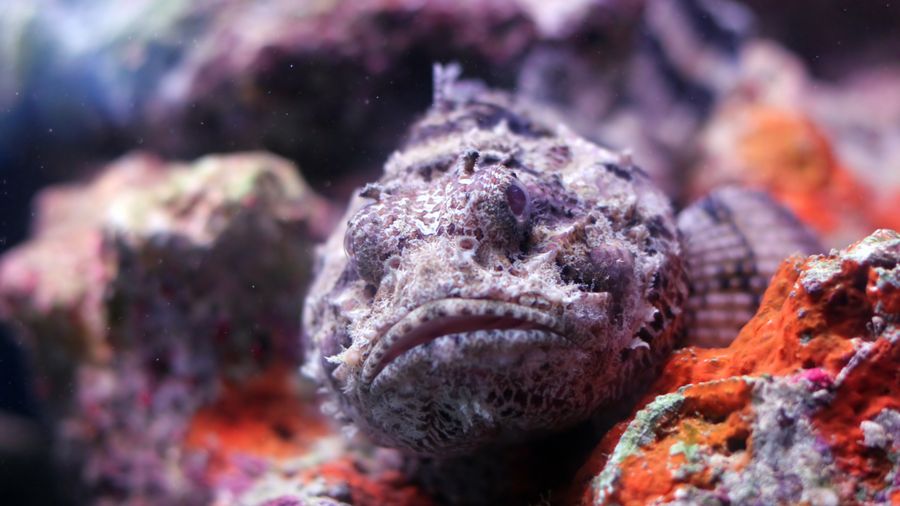
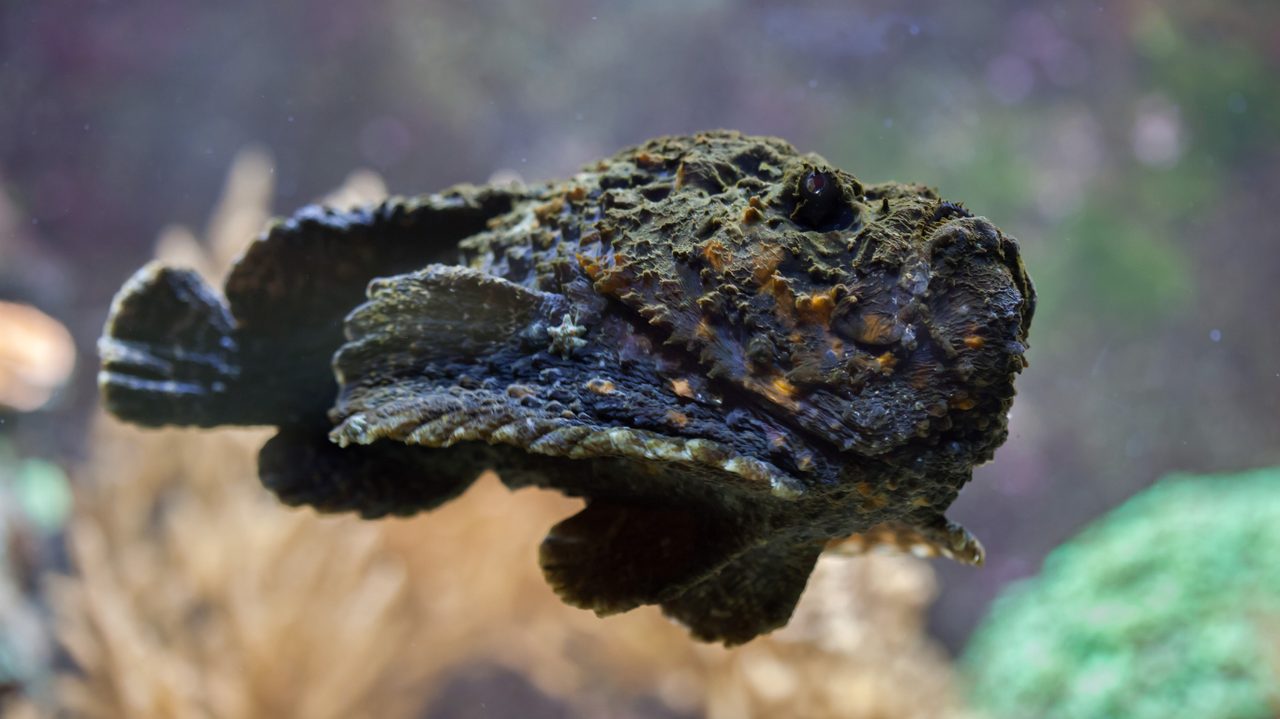
This family (scorpionfish) has venomous spines in the dorsal fins, purely defensive. The stonefish is the most dangerous, because it looks perfectly like an overgrown stone or coral block and lies dead-still on the bottom. You don't see it, and you step or lean on it. Its spines deliver an extremely painful, potentially dangerous venom. The scorpionfish is well camouflaged on reefs, with venomous spines; painful but usually less severe than the stonefish. The lionfish is beautiful, with striking fan-like fins and venomous spines. It is not aggressive, but its spines sting if you get too close or touch it. First aid (indicative, follow local guidelines): the standard approach is to soak the area in water as hot as you can just tolerate (not scalding), usually up to half an hour, because the venom is heat-sensitive and hot water relieves the pain and breaks down the venom. Remove visible spine fragments, and seek medical help; for the most severe stonefish stings an antivenom exists in hospital. A stonefish sting can be serious: always treat it as a medical emergency.
A stonefish is the camouflage expert of the reef: it is like a landmine that looks like an ordinary stone. You don't step on it if you never lean on or step on anything you can't see clearly. The best "detector" is the rule: touch nothing and place your hands and feet only on bare, visible substrate.
The harpoon shooter: cone snail
The cone snail is a beautiful, cone-shaped snail with a stunningly painted shell, and that very beauty is treacherous: it fires a tiny, venom-laden "harpoon" to paralyse prey, and that venom is in some species strong enough to be life-threatening to humans. There is no general antivenom. The rule is simple and absolute: never pick up a cone-shaped shell, however beautiful, even if it looks "empty". Virtually all incidents happen because someone picks up the shell.
The small and deadly: blue-ringed octopus
The blue-ringed octopus is small (fits in a hand), lives in shallow tidal pools and on reefs, and shows bright, iridescent blue rings when it feels threatened, a warning. Its bite is often painless but contains a powerful neurotoxin that can cause paralysis; there is no antivenom. The rings are precisely a sign: this animal is warning you to stay away. Never touch, never pick up, and in tidal pools do not grope blindly among the rocks with your hands.
The burning veils: jellyfish and the Portuguese man-of-war
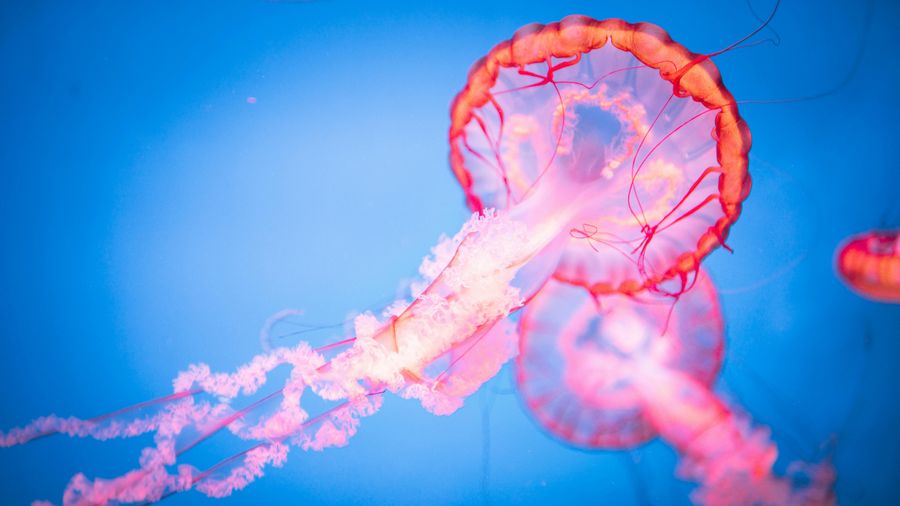
Jellyfish (and their relative the Portuguese man-of-war, strictly a colony) have tentacles full of microscopic nematocysts that fire venom on contact. The severity varies enormously: common jellyfish (usually painful but mild); box jellyfish and Irukandji (in certain tropical waters, especially around Australia/Indo-Pacific, potentially life-threatening, needing immediate medical help); and the Portuguese man-of-war (a blue floating "sail" colony with long tentacles, very painful). First aid (indicative, and note the nuance): this is where wrong first aid can make it worse. General principles: never rinse with fresh water and do not rub; that can make un-fired stinging cells "fire" and release more venom. Remove tentacle fragments carefully (with tweezers or, with protection, scraped off), not with bare fingers. For certain jellyfish (e.g. the box jellyfish) vinegar is the recommended first step, because it deactivates the un-fired stinging cells; but for the Portuguese man-of-war vinegar is discouraged, because it can release more venom there, so you rinse with seawater (not fresh water) instead. Because it differs by animal, follow the local guideline. Hot water (not scalding, soaking) helps many jellyfish and man-of-war stings against the pain. The "urinate on it" myth is false: urine can worsen the sting. Never do this. For severe reactions (breathing trouble, severe body-wide pain, signs of a systemic reaction, or a suspected box jellyfish/Irukandji): immediate medical emergency help.
Why first aid differs by jellyfish. Vinegar helps with one jellyfish and harms another, because it acts chemically on that specific animal's stinging cells. That is exactly why "one rule for all jellyfish" does not exist and why you follow the local guideline and, where present, the instructions at the beach or dive centre. When in doubt: don't rinse with fresh water, don't rub, remove tentacles carefully, and seek help.
The burning reef: fire coral and sea urchins
Fire coral is not a true coral but a relative with stinging cells; on contact it gives a burning, itching skin reaction. It looks like ordinary coral, so touch nothing. Sea urchins: their long, brittle spines can break off in your skin (often hand or foot) and give painful, infection-prone wounds; some species have mild venom. Remove spines carefully, disinfect, and seek medical help for deep or numerous spines or signs of infection. Prevention: never place your hands and feet blindly, certainly not in crevices or on a surf entry.
Bites that are not venom: moray eels and others
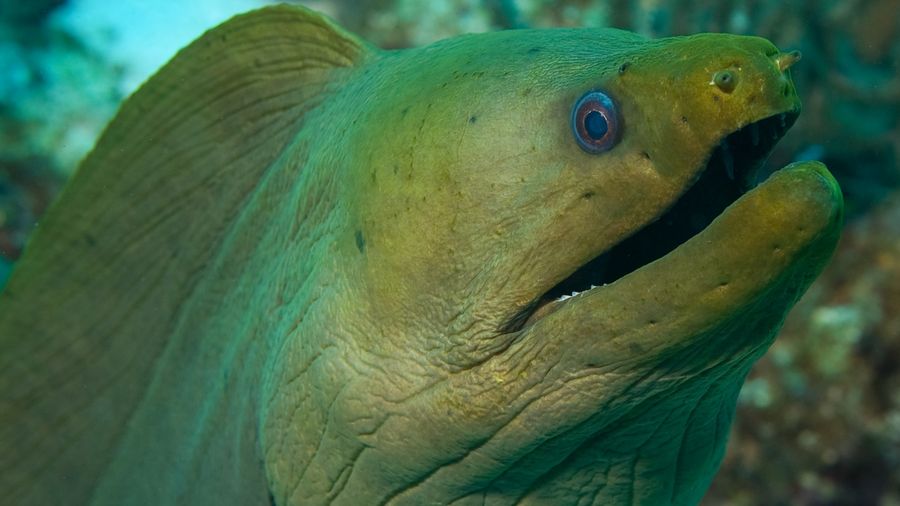
Not every danger is venom. The moray eel, for example, is not venomous but has a powerful bite with backward-pointing teeth. Morays are not aggressive; almost all bites happen because people put their hand into a crevice (to pet or feed) where the moray lives. The lesson is the same as with all the animals above: keep your hands to yourself, never grope in crevices, and don't feed. Some sea snakes are venomous but very shy and almost never bite a diver who leaves them alone.
Real-world examples
The Netherlands. Few tropical venomous animals, but for example the weever, a fish with venomous spines that buries itself in the sand in shallow water; bathers and divers sometimes step on it. Hot water is the standard first aid here too. It shows that venom is not only tropical.
Egypt (Red Sea). Stonefish, scorpionfish, lionfish, fire coral and sea urchins are common. The clarity of the water makes it easy to touch nothing, but the stonefish remains the camouflage pitfall when placing hands or feet.
Indonesia (muck diving). Muck sites are full of unusual but sometimes dangerous animals: blue-ringed octopus, stonefish, cone snails, toxic nudibranchs. Precisely here, where you look small and close, the "don't touch" rule is crucial.
Maldives. Stonefish, scorpionfish, lionfish and sea urchins on the reefs; jellyfish seasonally. Good buoyancy prevents almost every incident.
Mozambique (Tofo and Vilanculos). At Tofo and Vilanculos you meet scorpionfish, lionfish, stonefish, fire coral and sea urchins on the reefs, and in shallow and sandy water near the coast you must watch where you place your hands and feet. On the surf launch and shore entries in the break, "watch where you step and grab nothing" is extra important. For both places: the warm, rich waters that bring the mantas and whale sharks also harbour these animals, so the golden rule (touch nothing) protects you everywhere.
Common mistakes
| Mistake | What goes wrong | How to avoid it |
|---|---|---|
| Picking up a pretty shell (cone snail) | A life-threatening harpoon sting | Never pick up shells, not even "empty" ones |
| Placing hands/feet blindly | Stepping on a stonefish or sea urchin | Place only on bare, visible substrate; look |
| Touching an animal (octopus, coral) | A sting, bite or burning reaction | Touch nothing; watch and photograph |
| Putting a hand in a crevice | A moray bite | Never grope in crevices; don't feed |
| Rinsing a jellyfish sting with fresh water | More venom released, worse reaction | No fresh water; follow the animal/local guideline |
| Using vinegar on every jellyfish | Releases more venom on a man-of-war | Vinegar only where recommended; otherwise seawater |
| "Urinating on" a jellyfish sting | Worsens the sting (myth) | Never do this; follow correct first aid |
| Poor buoyancy | Unintentionally touching the reef/animals | Improve trim and buoyancy |
Pro tips
- The most important "treatment" is prevention: touch nothing, place hands and feet only on bare, visible substrate, and never grope in crevices.
- Never pick up shells (cone snail) and never pet a small octopus (blue-ringed); beautiful here often means dangerous.
- Know the first-aid distinction: hot (not scalding) water for stonefish/scorpionfish and many stings; for jellyfish no fresh water, and vinegar only where recommended (not on the Portuguese man-of-war).
- Forget the urine myth; it sooner worsens a jellyfish sting.
- Always treat a stonefish sting and a suspected box jellyfish as an emergency and seek help immediately.
- Good buoyancy is venom prevention: whoever hovers neutral and horizontal touches nothing unintentionally.
Frequently asked questions
What is the difference between "venomous" and "poisonous"? Venomous means the animal actively injects venom via a spine, tooth or stinging cell (it "fights back" if you touch it or step on it). Poisonous means the toxin is in the animal and is harmful if you touch or eat it. For the swimming diver, venomous is the most relevant.
Why is the stonefish so dangerous, and how do you prevent a sting? It is perfectly camouflaged as a stone and lies dead-still on the bottom, so you don't see it and step or lean on it, after which its venomous dorsal spines sting you. Prevent it by placing hands and feet only on bare, visible substrate and never leaning on anything blindly.
What is the usual first aid for a stonefish or scorpionfish sting? Soak the area in water as hot as you can just tolerate (not scalding), usually up to half an hour, because the venom is heat-sensitive; remove visible spine fragments and seek medical help. For the most severe stonefish stings an antivenom exists in hospital.
Why must you never rinse a jellyfish sting with fresh water, and why is vinegar not always good? Fresh water can make un-fired stinging cells "fire" and release more venom. Vinegar deactivates the stinging cells of some jellyfish (e.g. box jellyfish) and helps, but on the Portuguese man-of-war it can release more venom; so follow the animal-specific, local guideline.
Why must you never pick up a pretty cone-shaped shell? It may be a live cone snail, which fires a venom-laden harpoon that in some species is life-threatening to humans, with no general antivenom. Virtually all incidents happen because someone picks up the shell.
Summary
The sea is full of animals with venom, but almost every incident is preventable, because virtually all that venom is defensive: the animal stings or bites only when you touch it, step on it or corner it. The crucial distinction is venomous (injects venom via spine, tooth or stinging cell, which the diver most often meets) versus poisonous (toxin in the body, harmful on contact or if eaten). The main dangerous animals are the venomous fish (stonefish, scorpionfish, lionfish, with hot, not scalding water as the usual first aid), the cone snail (never pick up a shell), the blue-ringed octopus (never pet; the blue rings are a warning), the jellyfish and Portuguese man-of-war (where first aid differs by animal: never fresh water, vinegar only where recommended and not on the man-of-war), and the burning fire coral and sea urchins. The moray eel is not venomous but bites if you grope in its crevice. The thread is that prevention is far more effective than first aid: touch nothing, place hands and feet only on bare visible substrate, never grope in crevices, don't pick up shells, and keep good buoyancy. Still, know the first-aid nuances, because wrong treatment can make it worse, and treat a stonefish sting or a suspected box jellyfish always as a medical emergency.
The 10 things every diver should know by heart
- Almost all sea venom is defence; you prevent nearly everything by touching nothing.
- Venomous injects venom (it stings you); poisonous is harmful on contact or if eaten.
- Place hands and feet only on bare, visible substrate; the stonefish is invisible.
- Never pick up shells (cone snail) and never pet a small octopus (blue-ringed).
- Never grope in crevices (moray, sea urchin, hidden animals) and don't feed.
- Stonefish/scorpionfish: hot, not scalding water as the usual first aid; the stonefish is an emergency.
- Jellyfish: never fresh water, don't rub, remove tentacles carefully.
- Vinegar helps some jellyfish (box jelly) but harms a man-of-war; follow the local guideline.
- The "urinate on it" method is a myth and worsens the sting.
- Good buoyancy is venom prevention; in a serious sting, treat as an emergency and seek help.
Sensitive topic. This information is educational and general, and does not replace medical training, local guidelines or professional help. First-aid advice differs by animal and by region. Always follow the current local guidelines and, in a serious sting, call professional help immediately (local emergency number or DAN).
Gallery