Marine Biology
Sharks
The truth about sharks for divers — anatomy and senses, the species you meet, their role as top predators, myth versus fact on the real risk, and how to behave in an encounter.
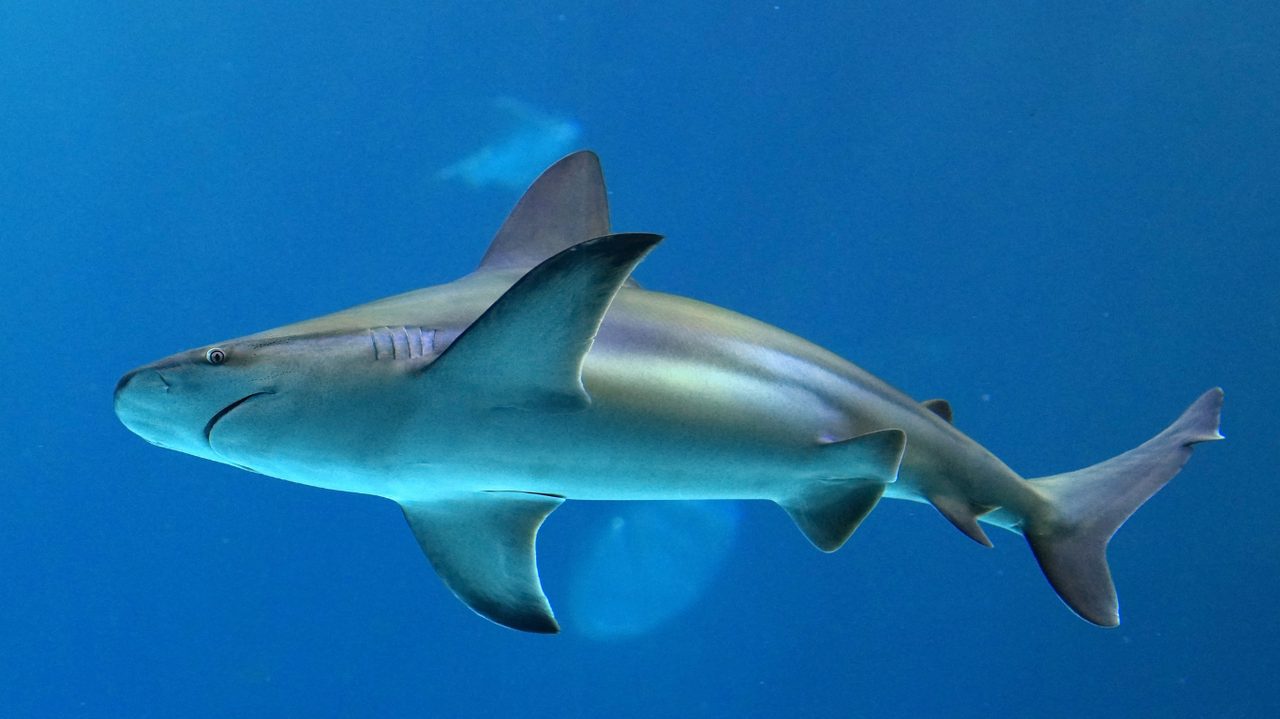
No animal inspires so much fear and fascination as the shark. For most divers, seeing a shark is a highlight, not a nightmare. This topic replaces the myths with facts: what a shark really is, how it lives, why it matters so much, and how you behave in an encounter.
The shark has an image problem that does the animal little justice. Films and headlines painted a cold-blooded man-eater for decades, while the reality is that sharks are ancient, refined and mostly shy predators that play a key role in healthy oceans. For divers, seeing a shark is usually a privilege: a sign of a healthy ecosystem and one of the most impressive encounters the sea has to offer.
Sharks have existed for hundreds of millions of years, older than the dinosaurs and even older than trees. In that time they developed into highly efficient animals with senses that far exceed ours: they smell blood in minute concentrations, feel the electric fields of prey, and hear low-frequency vibrations from kilometres away. There are roughly five hundred or more described species, from the small, palm-sized lantern shark to the giant whale shark, and by far the majority are entirely harmless to humans.
Setting the proportions straight. Worldwide there are usually around seventy to eighty recorded unprovoked shark bites per year, of which on average a handful are fatal, against the billions of hours humans spend in the sea. At the same time, humans kill an estimated tens of millions of sharks per year (estimates vary, often towards a hundred million). The question "are sharks dangerous to us?" is out of all proportion to "are we dangerous to sharks?".
Key concepts
| Term | Short definition | Why it matters |
|---|---|---|
| Cartilaginous fish | Skeleton of cartilage, not bone | Distinguishes sharks/rays from bony fish |
| Ampullae of Lorenzini | Electroreceptors in the snout | Feel the electric fields of prey |
| Lateral line | Sensory organ along the body | Feels vibrations and movement in the water |
| Dermal denticles | Tooth-like skin scales | Make the skin rough and streamline the shark |
| Top predator | Predator at the top of the chain | Regulates the whole ecosystem |
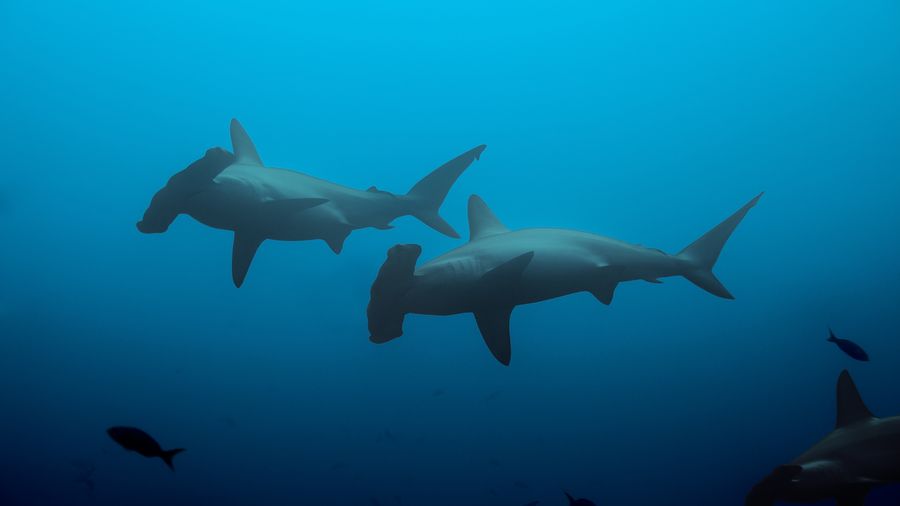
| Cephalofoil | The "hammer" of the hammerhead | Improves senses and manoeuvring |
| Finning | Cutting off fins, discarding the animal | The main threat to sharks |
| Baiting/chumming | Luring/feeding at shark diving | A controversial practice |
Understanding sharks
What a shark is: cartilage and senses
Sharks are cartilaginous fish: their skeleton is not bone but cartilage, lighter and more flexible. Together with the rays, they form a separate group, apart from the "ordinary" bony fish. Their skin is covered with dermal denticles, tooth-like scales that make the skin sandpaper-rough and streamline the flow (so efficiently that the structure has inspired swimsuits and ship hulls). What makes sharks so remarkable are their senses: smell (extremely sensitive; they detect certain substances in very low concentrations and determine direction from the tiny time difference between the two nostrils); hearing (especially low-frequency vibrations, such as a struggling, injured fish, over great distance); the lateral line (a row of sensory cells along the body that feels movement and pressure waves); electroreception (with pores in their snout, the ampullae of Lorenzini, they feel the weak electric fields every living animal emits, finding prey hidden in the sand); and sight (better than long thought, also in twilight, with a reflective layer behind the retina for low light).
Imagine you could smell blood on the scale of a drop in a swimming pool, and "feel" the heartbeat of a hidden animal as a faint tingle on your face. That is roughly the sensory world of a shark. We hunt with our eyes; the shark hunts with its whole skin and snout.
Teeth, feeding and reproduction
A shark's teeth grow throughout life: worn or lost teeth are continuously replaced by new ones that "shift" forward from behind, like a conveyor belt. A shark wears through many thousands of teeth in its life. The tooth shape suits the diet: sharp, cutting teeth in fish hunters, broad flat plates in shellfish eaters, and the giant filter feeders (whale shark) have barely functional teeth. Reproduction is strikingly diverse: some sharks are egg-laying (the well-known "mermaid's purses"), others live-bearing (with a placenta-like connection), and many are ovoviviparous (the eggs hatch inside the body). Sharks grow slowly, mature late and have few young. It is exactly that slow reproduction that makes them so vulnerable to overfishing: a depleted population recovers very slowly.
The species divers meet
There are hundreds of species, but a handful you realistically meet as a diver. An overview of common, generally manageable encounters:
| Species | Where/how | For the diver |
|---|---|---|
| Whitetip reef shark | Resting on the bottom/under overhangs, reefs | Shy, harmless; often still by day |
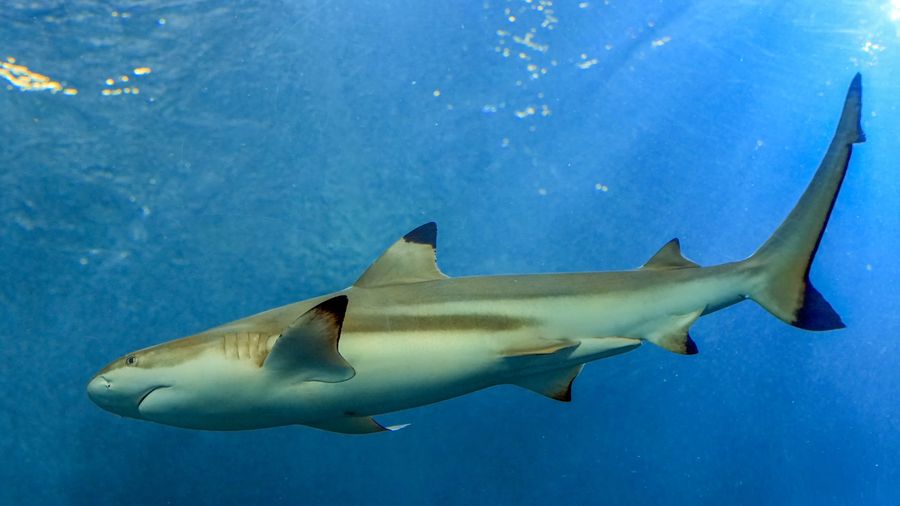
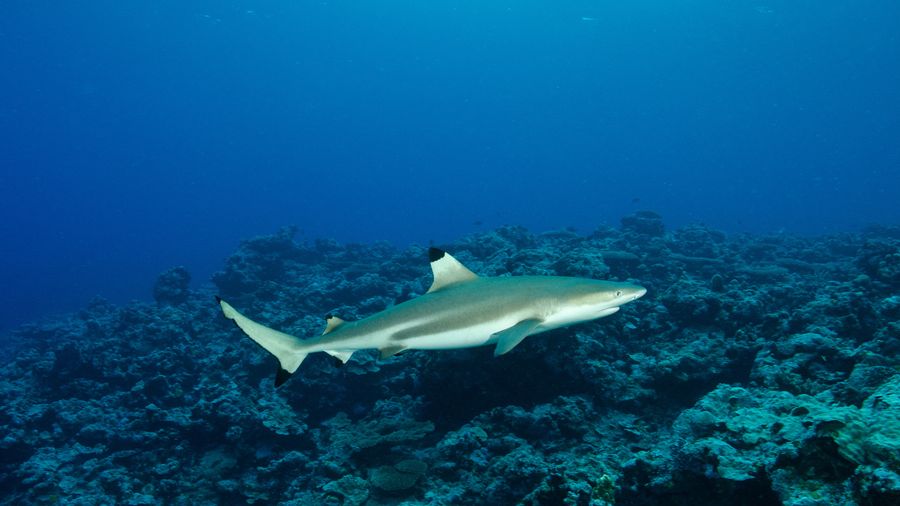
| Blacktip reef shark | Shallow reefs, lagoons | Shy, fast, keeps its distance |
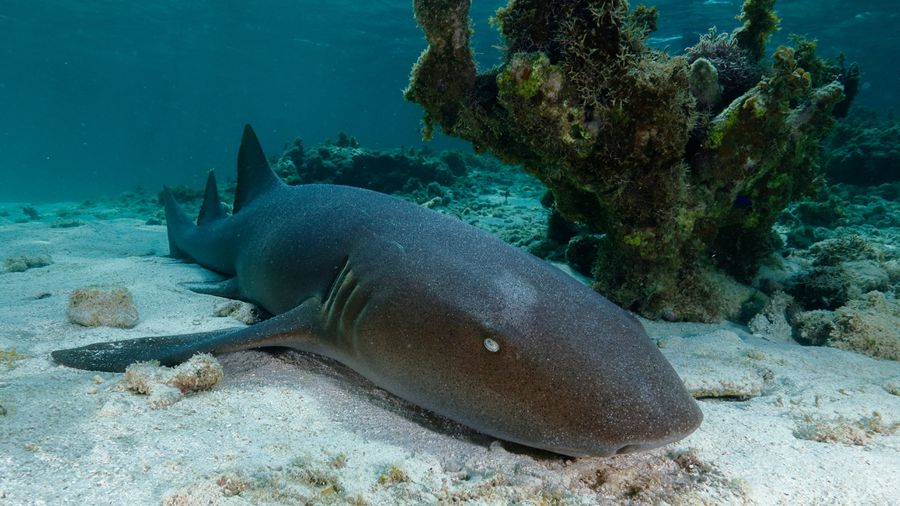
| Nurse shark | On the bottom, slow | Slow, harmless if left alone |
| Hammerhead (scalloped) | Often in schools, deeper, current sites | Impressive, shy; a highlight |
| Grey reef shark | Reefs with current, drop-offs | Curious, usually harmless |
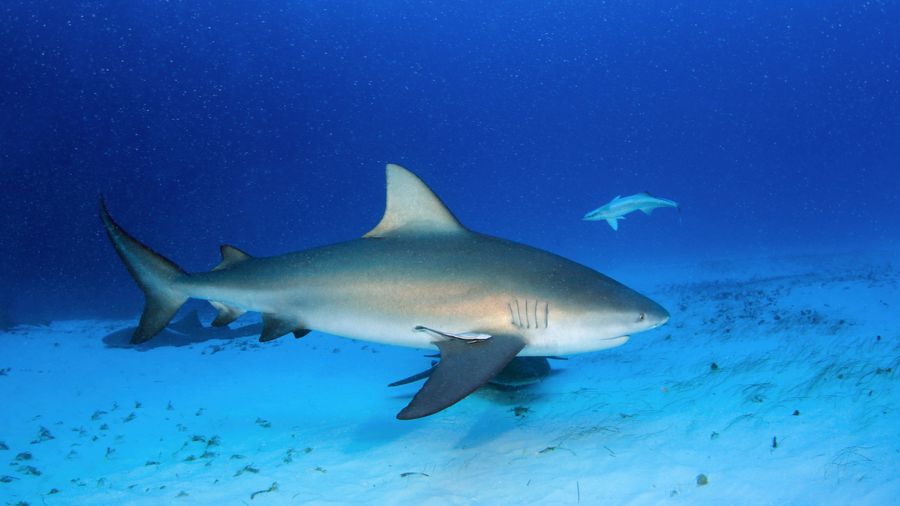
| Bull shark | Coast, river mouths, murky | Powerful, to be respected; situational |
| Tiger shark | Warm waters, sometimes at bait | Large, impressive; with respect |
| Great white | Cooler/temperate waters, rare for divers | Usually only via cage diving |
The whale shark (a separate topic) is the largest fish in the world but a gentle plankton filter feeder. Most encounters divers have are with the shy reef sharks, which sooner swim away than approach.
Ecological role: why sharks are indispensable
As top predators, sharks keep the whole ecosystem healthy. They eat mostly sick, weak and old animals, which keeps prey populations fit and limits disease. They regulate the numbers of mid-sized predators, which would otherwise upset the smaller fish and the whole balance. Remove the sharks, and a whole reef system can go out of balance (a "trophic cascade"): more mid-sized hunters, fewer plant-eating fish, more algae, less healthy coral. In short: sharks are not a threat to the reef but its guardians. A reef with healthy shark populations is almost always a healthy reef.
Myth versus fact: the real risk
The shark's reputation rests on a few stubborn myths. The facts:
| Myth | Fact |
|---|---|
| "Sharks hunt humans" | People are not on the menu; most bites are exploratory "mistakes", often in poor visibility or at the surface |
| "Sharks are dangerous everywhere" | Worldwide usually ~70-80 unprovoked bites/year, a handful fatal |
| "Blood makes them go into a frenzy" | They respond to prey signals, not automatically aggressive to every scent |
| "Seeing a shark means danger" | For divers usually a privilege and a sign of a healthy reef |
| "All sharks are big and aggressive" | Most species are small and/or shy and avoid people |
This does not mean sharks are toys: they are wild top predators you treat with respect and distance. But the real risk to a diver is small and manageable, certainly compared with everyday risks on land.
Did you know? Most bites on humans are not aimed at eating but are exploratory or a case of mistaken identity: a surfer at the surface, seen from below in poor visibility, resembles a seal. The shark "tastes", notices it is not prey and often lets go. That explains why many bites are single and not aimed at consumption.
Shark diving and the feeding debate
Organised shark diving lets divers get close to sharks, sometimes with baiting/chumming to make them appear reliably. There is a genuine, balanced debate here, and it is good to know both sides. Supporters point out that shark diving makes sharks economically valuable (a live shark that repeatedly draws divers is worth more than a dead one), which encourages local protection and awareness, and brings millions of people respect for sharks. Critics point out that feeding can disturb natural behaviour, condition sharks to associate people/boats with food, and in some places lead to more risk. A nuanced middle ground many responsible operators hold: encounters at natural aggregations or cleaning stations (without feeding) where possible, and where feeding happens, doing it with strict protocols and experienced guides. As a diver you deliberately choose an operator that takes the welfare of the animals and safety seriously.
Behaviour in an encounter
If you meet a shark, calm and respectful behaviour is the key, not panic. Stay calm and keep breathing; sharks respond to restless, thrashing movement. Keep the shark in sight and behave as a calm, confident presence, not as prey (no wild thrashing, no fleeing to the surface). Don't chase a shark; that disturbs and drives it away. Let it come and go. Don't touch and don't feed; keep your distance and respect its space. Stay low/horizontal near the reef or bottom rather than vulnerable at the surface. And if a rare shark is too curious or behaves in a way that concerns you, calmly and in a controlled way withdraw towards the reef/bottom/boat, facing the shark, without panic. The vast majority of encounters are simply a beautiful, brief spectacle: the shark passes, perhaps looks you over, and disappears.
Scenario. A diver in Egypt suddenly sees a grey reef shark appear from the blue. Their first impulse is to sprint to the surface, but they remember: stay calm, breathe, stay low, keep the shark in sight. They hover calmly; the shark makes a curious arc, looks them over, and glides away. What could have been a fright became the highlight of their dive trip, purely by not panicking.
Real-world examples
The Netherlands. Sharks are rare for divers here, but the North Sea has species (such as the smooth-hound and, further offshore, others). It shows that sharks are not only tropical; most are small and harmless.
Egypt (Red Sea). Reef sharks (whitetip, grey reef) on the reefs and drop-offs, and on the northern sites (Brothers, Daedalus) seasonal hammerheads and oceanic whitetips. A classic place to learn to observe shy reef sharks.
Indonesia (Raja Ampat, Komodo). Healthy reef shark populations (blacktip, whitetip) as a sign of well-protected reefs; on some sites schools and larger species. Proof that protection works: where fishing stops, the sharks return.
Maldives. Reliable reef shark encounters, hammerheads on deep sites, and nurse sharks; the country has largely banned shark fishing, which benefits the populations.
Mozambique (Tofo and Vilanculos). At Tofo you regularly see various sharks on the offshore reefs, and the healthy top predators belong to the same plankton-driven system that brings the mantas and whale sharks. The region is a study and conservation area for sharks and rays. At Vilanculos the shallower seagrass and sandbank systems are less of a shark stronghold, but young sharks use such coastal nurseries. For both: responsible operators and respect for the animals come first.
Common mistakes
| Mistake | What goes wrong | How to avoid it |
|---|---|---|
| Sprinting to the surface in panic | You behave as prey, a too-fast ascent | Stay calm, low and horizontal; keep breathing |
| Chasing a shark | Disturbs the animal, drives it away | Let the shark come and go; keep your distance |
| Touching or "petting" a shark | Disturbance, stress, possible risk | Never touch; respect its space |
| Seeing sharks as killing machines | Needless fear, missed experience | Know the facts; seeing a shark is a privilege |
| Choosing irresponsible baiting tours | Disturbed behaviour, welfare problems | Choose operators with strict, animal-friendly protocols |
| Thrashing at the surface | Resembles an injured animal | Stay calm; go to the bottom/reef if unsure |
| Forgetting that humans are the real danger | Unknowingly supporting harmful practices | Support protection; don't consume shark products |
Pro tips
- Stay calm and keep breathing in an encounter; sharks respond to restless, thrashing movement.
- Stay low and horizontal by the reef or bottom; at the surface you look more like prey.
- Never chase a shark; let it approach and leave, and keep it calmly in sight.
- Know the facts and share them; countering the shark myth helps protect the animals.
- Choose responsible operators that work animal-friendly and take safety seriously.
- Actively support shark conservation: don't consume shark products and value a live shark over a dead one.
Frequently asked questions
Why are sharks not "ordinary" fish, and what group are they related to? Sharks are cartilaginous fish: their skeleton is cartilage, not bone. They are related to the rays; together they form a separate group, apart from the bony fish.
What are the ampullae of Lorenzini and what do they do? Electroreceptors in the shark's snout with which it senses the weak electric fields of living animals, so it can find prey even hidden in the sand.
Why do shark populations recover so slowly after overfishing? Sharks grow slowly, mature late and have few young. A depleted population can therefore recover only very slowly, which makes them extra vulnerable.
Why are sharks called the "guardians" of the reef? As top predators they keep prey populations healthy (eating mostly sick/weak animals) and regulate mid-sized predators. Remove them, and the whole ecosystem can go out of balance (trophic cascade), with less healthy coral as a result.
How do you behave in a shark encounter? Stay calm and keep breathing, keep the shark in sight, stay low and horizontal by the reef or bottom, don't chase it, don't touch or feed it, and if concerned, withdraw calmly and in control, facing the shark.
Summary
Sharks are not cold-blooded man-eaters but ancient, refined cartilaginous fish that have existed for hundreds of millions of years and play a key role in healthy oceans. Their skin carries tooth-like denticles, and their senses (sight, smell, hearing, the lateral line and the electroreceptive ampullae of Lorenzini) far exceed ours: they smell minute concentrations, hear low-frequency vibrations from afar, and feel the electric fields of hidden prey. Their teeth replace throughout life, and their slow reproduction (egg-laying, live-bearing and ovoviviparous species) makes them vulnerable to overfishing. Of the hundreds of species, a diver mainly meets shy reef sharks, which sooner swim away than approach. As top predators, sharks are the guardians of the reef: remove them and the ecosystem goes out of balance. The real risk to people is small (worldwide usually around seventy to eighty unprovoked bites per year, a handful fatal), while humans kill an estimated tens of millions of sharks per year, mainly through finning. At shark diving there is a genuine debate about feeding; choose responsible operators. If you meet a shark, calm is the key: keep breathing, stay low, don't chase, don't touch, and enjoy, because seeing a shark is a privilege and a sign of a healthy sea.
The 10 things every diver should know by heart
- Sharks are ancient cartilaginous fish, related to rays, not "ordinary" fish.
- Their senses exceed ours, with electroreception (ampullae of Lorenzini) as a unique sense.
- Their teeth replace throughout life; the tooth shape suits the diet.
- Slow reproduction makes sharks vulnerable to overfishing.
- Most diver encounters are with shy reef sharks that sooner swim away.
- As top predators, sharks are the guardians of the reef (trophic cascade if removed).
- The real risk is small: worldwide usually ~70-80 unprovoked bites/year, a handful fatal.
- Humans are the real danger: an estimated tens of millions of sharks killed per year.
- In an encounter: stay calm, stay low, don't chase, don't touch.
- Choose responsible operators and support conservation; seeing a shark is a privilege.
Gallery