
Skills & Planning
Trim & Buoyancy
Buoyancy control and horizontal trim — the weight check, weight distribution, BCD and drysuit air, breathing as fine control, fin techniques and hover drills.
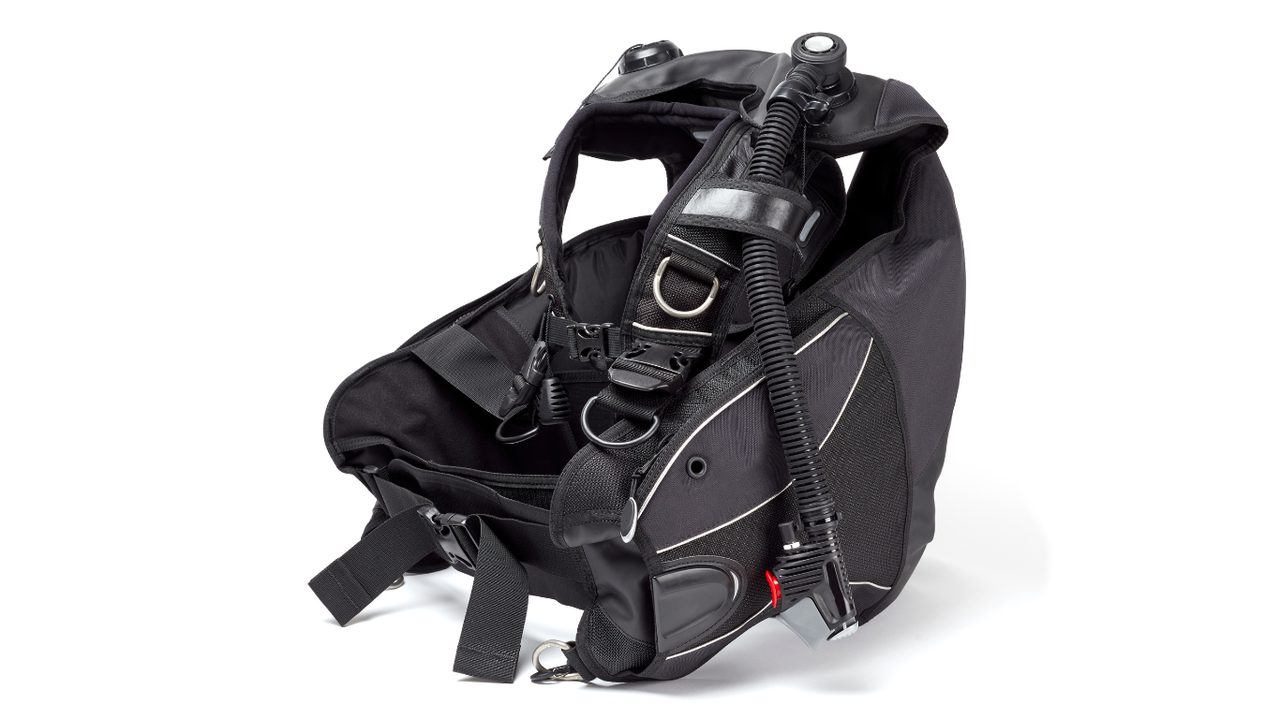
Ask an instructor what the most important diving skill is, and the answer is almost always the same: buoyancy control. A diver who hovers neutral and lies horizontal in the water does everything more easily. They hang still by a turtle without sinking or rising, don't touch the reef, stir up no sand, use less air because they aren't constantly correcting, and keep their depth constant — which matters for decompression. Poor buoyancy, by contrast, is at the root of reef damage, stirred-up murk, uncontrolled ascents and high air consumption.
Two terms belong together but are not the same. Buoyancy is about whether you sink, hover or rise: the vertical balance. Trim is about your posture: are you lying nicely horizontal, or do your legs hang down and you tumble forward? You can hover neutral and still have poor trim, which still costs you energy and control. True mastery is both at once: neutral and horizontal, relaxed, with minimal corrections.
Trim and buoyancy are technique, not talent. Many beginners think "lying well in the water" is something some people just can do. It is a learnable technique: the right amount of lead, the right placement, calm breathing and conscious posture. Anyone who masters these four hovers beautifully. It is practice, not aptitude.
Key concepts
| Term | Short definition | Why it matters |
|---|---|---|
| Buoyancy | Whether you sink, hover or rise (vertical balance) | Controls your depth |
| Neutral | You hover, neither rise nor sink | The goal during a dive |
| Trim | Your posture/attitude in the water | Determines drag, efficiency and control |
| Horizontal trim | Lying flat, legs not hanging down | Least drag, no bottom contact |
| Weight check | Test of whether you carry the right lead | The basis of good buoyancy |
| Weight distribution | Where you place the lead | Determines your posture (trim) |
| BCD | Vest to add/release air | Coarse buoyancy control |
| Drysuit | Suit with an air layer; buoyancy via inlet/outlet | Insulation and an extra buoyancy variable |
| Breathing as fine control | Lung volume changes your buoyancy | The last, finest correction |
| Hover | Staying motionless and neutral | The test of mastery |
Understanding trim and buoyancy
The physics in brief
From Archimedes: you hover neutral when you displace exactly as much water as you weigh. Two things make this tricky during a dive, both from the gas laws. Your wetsuit compresses at depth (Boyle): the neoprene loses volume and therefore buoyancy, so you become heavier deeper and lighter shallower — you must keep adjusting. And your tank gets lighter as you consume air; by the end of the dive you are several kilos lighter, which makes you more positive, exactly when you want to hang still at your safety stop. These two effects explain why buoyancy is not "set and forget" but continuous adjustment.
The weight check: the right amount of lead
It all starts with the right amount of lead. Over-weighting is the most common mistake: you then have to add a lot of air to your BCD to compensate, that air expands and compresses with depth changes, and you bounce between too heavy and too light. Under-weighting, and you can't get down or stay down at the end. The standard surface weight check: hover upright with (nearly) empty lungs exhaled, BCD fully empty, breathing normally. With the right lead you float at eye level — the water surface at your eyes/forehead. As you exhale you sink slowly; as you inhale you rise a little. Account for a near-empty tank: at the start of the dive your tank is full and heavier, so add a small correction (often about 1.5-2 kg for the air you will consume) so that at the end, with an empty tank, you can hold your safety stop at 5 m.
A weight check is like balancing a scale: you seek the point where you neither rise nor sink. Over-weighting is like an overloaded scale you must constantly counteract; just right is like a scale that stays balanced by itself.
Weight distribution: the key to trim
Where you place the lead determines your posture. The classic beginner error is all the lead on a hip belt: that pulls your hips down and your feet with them, so you hang "seated" or with legs dangling (feet-down trim). You then kick diagonally upward, stir up sand and burn air. To lie horizontal you distribute weight: trim pockets on the tank/backplate or higher on the torso move weight up and help lift your feet; shifting the tank higher or lower changes your fore-aft balance. The goal is that, relaxed and without moving, you stay roughly horizontal — part lead, part posture.
Air management: BCD and drysuit
The BCD is your coarse control: add air to become more positive, release air to become more negative. Two rules of thumb: adjust in small amounts and anticipate — add small amounts while descending as your suit compresses, and release air in time while ascending before you go too fast. Waiting until you notice is too late. Release actively on ascent: the expanding air (Boyle) speeds up your ascent; you must dump it to control the rate. Forgetting to dump is a common, dangerous mistake leading to a too-fast ascent. With a drysuit you have a second air variable: the suit itself. You add air against the "squeeze" and to insulate, and release it on ascent. Drysuit diving needs extra training because the air moves around and, if it runs to your feet, can flip you upside down (feet up, an emergency). The basic rule: keep the bubble small and controlled, and practise the dump procedures. A common approach in cold water is: use the drysuit only for insulation and against the squeeze (small bubble), and the BCD for actual buoyancy — one clear buoyancy control instead of two working against each other.
Breathing: the fine control
Once you are roughly neutral with your BCD, you make the last, finest corrections with your lungs. Inhaling increases your volume and makes you slightly positive (you rise slowly); exhaling makes you slightly negative (you sink). Experienced divers steer their last centimetres purely on breathing: a deeper inhale to float over a coral head, a slow exhale to sink again. This only works if your lead and BCD are set correctly. Calm, deep, regular breathing gives the best control and the lowest air consumption — buoyancy and gas management come together here.
Horizontal trim and posture
Besides lead and air, your body posture sets your trim. The "aeroplane position" is the goal: horizontal, chest slightly down, knees bent so the lower legs point up, fins higher than your torso. From that position you kick behind you rather than downward, so you don't hit the reef or stir up sand. Fin techniques in brief: the flutter kick (standard up-and-down, efficient in open water but stirs up sand over soft bottoms); the frog kick (a wide, frog-like stroke pushing water horizontally back — ideal over a delicate bottom or in a wreck, as it barely stirs up); and back kick and helicopter turn (advanced techniques to move backwards or turn on the spot).
Scenario. A diver with all their lead on a hip belt hangs feet-down and kicks diagonally up, repeatedly stirring up the sand of an Indonesian muck site so the photographer behind sees nothing. By moving some lead to trim pockets higher on the gear and bending the knees, they come horizontal and kick behind them with a frog kick. The sand stays put, the photos work, and their air consumption drops.
Real-world examples
The Netherlands (drysuit, cold water). The place to learn drysuit buoyancy: two air variables (suit and BCD), cold that tempts you to over-inflate the suit, and the dreaded "feet up" if the bubble runs to your feet. Trim training is more serious and technical here than in warm water.
Egypt (Red Sea, wetsuit). Warm, clear and salty: much lead due to the salt, but simple buoyancy with just a BCD. Ideal for practising horizontal trim and the hover over a sandy bottom without reef damage.
Indonesia (muck diving, macro). Poor trim is punished immediately: stirred-up sand ruins the visibility for yourself and others. Frog kick and horizontal trim are almost mandatory; muck diving is an excellent trim school.
Maldives (drift, reef). In current, good trim helps you streamline and save energy, and prevents being pushed onto coral. Neutral and horizontal makes a drift dive effortless.
Mozambique (Tofo and Vilanculos). At Tofo you often dive shallow reefs with surge and sometimes current; good buoyancy keeps you off the coral and saves the air you would otherwise waste on the negative entry and in the swell. At Vilanculos, with sandy bottoms around the Bazaruto banks, horizontal trim and a frog kick prevent you from spoiling the already variable visibility by stirring up sand. Both reward a diver who hangs still and horizontal.
Common mistakes
| Mistake | What goes wrong | How to avoid it |
|---|---|---|
| Over-weighting | Lots of BCD air needed, yo-yo buoyancy, high air use | Do a serious weight check; less is often better |
| All lead on the hip belt | Feet down, stirring sand, diagonal kicking | Distribute lead; use trim pockets higher on the gear |
| Forgetting to dump on ascent | Too-fast, uncontrolled ascent | Release air in time and actively; anticipate Boyle |
| "Swimming" buoyancy with hands | Tiring, hides poor trim | Hands still; steer on breath and BCD |
| Using BCD and drysuit against each other | Confusing, unstable buoyancy | Choose one buoyancy control (usually the BCD) |
| Skipping the weight check on a new setup | Wrong weight, poor dive | Repeat the check on every new combination |
| Kicking feet-down | Reef damage, stirred sand | Bend the knees, lie horizontal, kick behind you |
Scenario. A diver in Zeeland keeps adding air to their drysuit "for comfort" in the cold. On a sudden move the bubble runs to their feet, which shoot up; they tumble upside down and risk an uncontrolled ascent. By bending the legs, tucking the knees and bringing the bubble back (via the foot valve or by rolling over), they recover. The lesson: keep the drysuit bubble small and use the BCD as the main buoyancy.
Pro tips
- Dive as light as possible (but not too light): do a real weight check and shed excess lead; it solves more buoyancy problems than anything else.
- Distribute your lead for trim: move weight up (trim pockets) if your feet sink, so you lie horizontal.
- Anticipate with your BCD: add small amounts descending, dump in time ascending; never wait until you notice.
- Fine-tune with your breathing, calm and deep; it gives the best control and the lowest air use.
- Keep your hands still and force yourself to rely on breath and BCD.
- Practise the hover briefly on every dive; it is the fastest route to mastery.
Frequently asked questions
What is the difference between buoyancy and trim? Buoyancy is the vertical balance: whether you sink, hover or rise. Trim is your posture in the water: whether you lie horizontal or hang legs-down. You can hover neutral and still have poor trim.
Describe a correct surface weight check. With an empty BCD and normal breathing you hover at eye level; exhaling you sink slowly, inhaling you rise a little. Add a small correction for the air you will consume, so you can hold your safety stop with a near-empty tank.
Why must you keep adjusting your buoyancy during the dive? Your wetsuit compresses at depth (Boyle) and loses buoyancy, and your tank gets lighter as you use air. Both change your buoyancy continuously, so you keep steering with BCD and breathing.
Why is all your lead on a hip belt often bad for your trim? It pulls your hips and feet down, so you hang legs-down and kick diagonally up, stirring sand and burning air. Lead higher on the gear (trim pockets) improves horizontal trim.
How do you use your breathing for buoyancy, and what is the condition? Inhaling makes you slightly positive (rise slowly), exhaling slightly negative (sink); this is the fine control. The condition is that your lead and BCD are already set correctly, otherwise breathing has to compensate too much.
Summary
Buoyancy (the vertical balance: sinking, hovering or rising) and trim (your posture in the water) are the core skill of diving; master them and everything else becomes easier, safer and more economical with air. You control both with four levers: the amount of lead, its placement, your breath and your apparatus (BCD/drysuit). It all starts with the right amount of lead via a real weight check (hover at eye level with an empty BCD, corrected for the full tank), because over-weighting is the most common cause of poor buoyancy. The placement of that lead sets your trim: distribute it and move weight up to lie horizontal rather than feet-down. Your BCD is the coarse control with which you anticipate (add descending, dump actively ascending as the air expands), and with a drysuit you keep the bubble small and use one clear buoyancy control. The fine control is calm, deep breathing, which also lowers your air consumption. Horizontal trim with bent knees and a suitable fin technique (frog kick over delicate bottoms) keeps you off the reef and the sand in place. It is a doing skill: the hover and fin pivot build it, and you repeat the weight check on every new setup.
The 10 things every diver should know by heart
- Buoyancy is the vertical balance; trim is your posture; aim for neutral and horizontal.
- Four controls: Lead, Location, Air (lungs), Apparatus (BCD/drysuit).
- Do a real weight check; over-weighting is the most common buoyancy fault.
- Correct the weight check for a full tank, so you can hold your stop with an empty tank.
- Distribute your lead for trim; move weight up if your feet sink.
- Anticipate with your BCD: add descending, dump actively ascending.
- Fine-tune with calm, deep breathing; it also saves air.
- Lie horizontal with bent knees; kick behind you, not downward.
- Use a frog kick over delicate or soft bottoms to avoid stirring up sand.
- With a drysuit, keep the bubble small and choose one clear buoyancy control.