
Equipment
Gear Maintenance
Caring for your scuba gear — rinse, dry and store after every dive, servicing intervals and tank inspections, O-rings, recognising wear, and maintenance on the road.
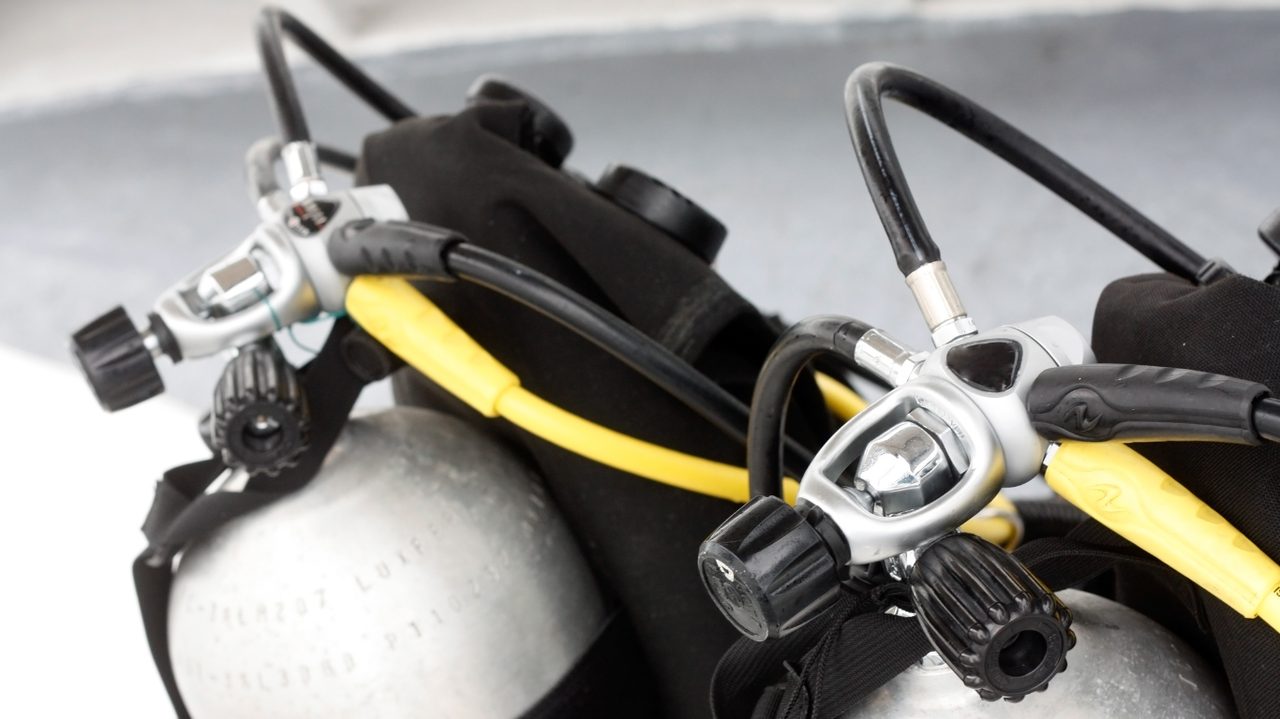
Maintenance is invisible safety. The regulator that keeps working at 30 m, the tank valve that doesn't seize, the inflator that doesn't stick: that is not chance, but the result of rinsing, drying, storing and timely servicing. Well-maintained gear does not let you down. Many of the emergencies in the diving world are, at their root, maintenance problems you could have prevented at the surface.
Salt water, sand, sun and time are the enemies of your gear. Salt crystallises in valves and hinges, sand abrades seals, UV light breaks down neoprene and rubber, and use wears moving parts. The good news is that most maintenance is simple and something you do yourself: rinse with fresh water after every dive, dry well, store out of the sun, and service on time. There is a clear line between what you may do yourself (cleaning, checking, small things like a mask strap or O-ring) and what you leave to a certified technician (the internal service of your regulator, the inspection of your tank). Respecting that distinction is itself a safety measure.
Maintenance is prevention. Remember the prevention idea from the emergencies topic: the best emergency is one you prevent. Maintenance is a large part of that. A well-rinsed, dried and timely-serviced set simply gives fewer free flows, leaks, sticking inflators and seized valves. Every minute of rinsing at the surface saves a possible problem at depth.
Key concepts
| Term | Short definition | Why it matters |
|---|---|---|
| Rinsing | Rinsing with fresh water after every dive | Removes salt, sand and dirt |
| Dust cap | Sealing cap on the first stage | Keeps water out of the regulator when rinsing |
| O-ring | Rubber sealing ring | Prevents leaks; wears and must be replaced |
| Annual service | Internal regulator overhaul by a technician | Keeps the breathing regulator safe |
| Visual inspection (VIP) | Internal tank inspection | Checks corrosion/damage, often yearly |
| Hydrostatic test | Pressure test of the tank | Legal test, usually every few years |
| UV degradation | Breakdown of neoprene/rubber by the sun | Shortens the life of suit and parts |
| Corrosion | Salt/moisture attack on metal | Attacks tank, springs and parts |
| Self vs. dealer | Line between own and professional maintenance | Decides what is safe to do yourself |
Understanding maintenance
After every dive: rinse each part
Fresh water is your most important maintenance tool. Rinse after every dive (day), ideally as soon as possible so salt does not dry in. Per part: Regulator (the key pitfall). The first stage must get no water inside. Make sure the dust cap is on and dry before you rinse (it goes on as soon as you take the regulator off the tank). Rinse the first and second stages with fresh water, but do not press the purge button of the second stage while running water through the mouthpiece without pressure, as water can then enter via the second stage. Safer: rinse the regulator while it is still pressurised on the tank (the intermediate pressure keeps water out), or otherwise keep the second stage still and rinse gently. Let the second stage flush well to remove salt from the valve. BCD. Rinse not only the outside but also the inside of the bladder. Let some fresh water in through the inflator, shake, and let it out again through a dump valve (held upside down). Salt in the bladder attacks it from within and can make the valves stick. Rinse the inflator buttons well too. Mask, snorkel, fins, computer, instruments. Just rinse with fresh water; on the computer mind the buttons (salt around them makes them stick). Tank. Rinse the outside; keep the valve and O-ring clean, and let no water into the tank. Suit, hood, gloves, boots. Rinse and, for a wetsuit, occasionally use a mild wetsuit wash against bacteria/odour.
Drying and storage
After rinsing comes drying, always out of direct sunlight, because UV breaks down neoprene, rubber and seals. Regulator: dry well, dust cap on, don't hang it by the hoses (that pulls on the connections); store it loosely coiled or hanging from the first stage. BCD: let the bladder dry inside (there is always some water) by hanging it partly inflated, so mould has no chance; store it lightly inflated, not compressed flat. Wetsuit/drysuit: on a wide hanger (not a thin one that deforms the shoulders), out of the sun, fully dry before storage; lightly wax drysuit zips per the manufacturer, and treat latex seals with talc against sticking. Tank: upright or lying, dry, with a little pressure in it (never fully empty, to prevent moisture entering); don't store it in full sun or extreme heat. Store everything dry, cool and dark. Gear stored damp will mould and corrode.
Rinsing and drying your gear is like hosing down your bike after a ride through winter road salt: if you don't, the chain rusts and the hinges squeak exactly when you need them. Salt is patient; it eats slowly but surely.
Periodic service and tank inspections
Besides daily rinsing, your gear needs professional maintenance at fixed intervals. These are indicative and vary by brand, country and use; always follow the manufacturer and local rules.
| Part | What | Interval (indicative) | Who |
|---|---|---|---|
| Regulator | Internal overhaul, O-rings, springs, adjustment | Often yearly or per number of dives | Certified technician |
| Tank: visual inspection (VIP) | Internal inspection for corrosion/damage | Often yearly | Inspecting body/dealer |
| Tank: hydrostatic test | Pressure test for strength | Usually every few years (country-dependent) | Accredited testing body |
| BCD | Inflator, valves, bladder for leaks | Periodic, often yearly | Technician/dealer |
| Dive computer | Battery, seals | Battery as needed; seal at battery change | Dealer or self (brand-dependent) |
The regulator service is crucial: internal wear is invisible from the outside, until the regulator breathes harder at depth or free-flows. The tank inspections are often legally required; a tank without a valid inspection may not be filled or dived, and fill stations rightly refuse it. Remember: the date is stamped on the tank.
Did you know? A regulator that "breathes fine" at the surface can still fall short at depth or low tank pressure if the internal springs and seats are worn (think balanced vs unbalanced). That is why the annual service is not a formality: it catches wear you can't feel yourself until it fails underwater.
O-rings and small self-repairs
O-rings are small rubber rings that seal everywhere (tank valve, hose connections, computer battery cover). They wear, dry out and crack. What you may and should do yourself: check and replace the tank O-ring (on the valve) if flat, cracked or damaged (a faulty tank O-ring gives a bubble stream when connecting); carry a spare set of O-rings, a mask strap and a spool (it saves an aborted dive); and visually check hoses and connections for cracks, bulges or corrosion. What you do not do yourself: open the first or second stage and replace internal parts. That requires tools, parts, knowledge and a test bench. Wrongly adjusted regulators are life-threatening; leave this to a technician.
Recognising wear and faults
Maintenance is also attentiveness. Signs that something needs attention: regulator (harder breathing, a slight free flow, "bubbling" or feeling wet at the first stage, or an unstable intermediate pressure); BCD (bladder won't hold air, inflator sticks or is slow, dumps don't seal); hoses (cracks, bulges, corrosion at the connections); suit (tears, hardened/crumbling neoprene, leaking zips or seals); tank (rust, dents, an expired inspection date, a valve that turns stiffly). Spot any of these and fix it before the next dive, or take the part out of service. "It worked last time" is not a safety argument.
Maintenance on the road
On a dive trip or liveaboard, good maintenance is harder but no less important: rinse daily in the provided rinse tanks (often separate tanks for computers/cameras and for the rest — use them properly); protect your gear from sun and heat on board (don't leave regulators and suits in the full tropical sun for hours); carry spare parts (O-rings, mask strap, spool, batteries) plus a travel service kit; and make sure your gear is freshly serviced and tested before departure — a remote destination is the wrong place to discover your regulator is due.
Scenario. A diver travels to a remote destination without servicing their regulator ("it worked fine last season"). On the second day the second stage starts to free-flow slightly; there is no dealer nearby and they miss dives. Had the regulator been serviced and tested before departure, this would have been prevented. On the road, preventive maintenance is doubly important, because repair on the spot is often impossible.
Real-world examples
The Netherlands (cold, diaphragm regulators, drysuit). Diaphragm/sealed regulators and drysuits need specific care: maintain drysuit zips and seals, and keep freeze-resistant regulators clean and serviced. Fresh water and cold make timely service important to prevent free flows.
Egypt (salt, sun, rental). Fierce salt water and intense sun: rinse quickly, store out of the sun, and on rental gear check the tank inspection and the state of the regulator beforehand. Rental gear doesn't always get optimal care; test it as if it were your own.
Indonesia (sand, muck, remote). Muck sites mean fine sand that gets everywhere; thorough rinsing is extra important. Remote locations make spare parts and pre-trip service crucial.
Maldives (liveaboard, many daily dives). Multiple dives per day on a liveaboard: a daily rinse routine, protection from the sun on deck, and attention to the BCD bladder that collects salt from heavy use.
Mozambique (Tofo and Vilanculos). At Tofo gear and cameras take a beating from the surf launch (sand and knocks), salt and sun; thorough daily rinsing and protection from heat is important, and because it is remote, you travel with freshly serviced gear and spare parts. At Vilanculos the same applies to a milder degree; the fine sand of the Bazaruto banks calls for careful rinsing. For both: a dealer is far away, so you maintain preventively.
Common mistakes
| Mistake | What goes wrong | How to avoid it |
|---|---|---|
| Not rinsing, or too late | Salt crystallises in valves/hinges | Rinse after every dive (day), as soon as possible |
| Letting water into the first stage | Internal corrosion, free flow | Dust cap on/dry; rinse safely (preferably pressurised) |
| Pressing the purge while rinsing unpressurised | Water enters via the second stage | Don't press the purge on an unpressurised regulator |
| Rinsing the BCD outside only | Salt attacks the bladder, valves stick | Rinse the bladder inside too and drain it |
| Drying/storing in the sun | UV breaks down neoprene and rubber | Dry and store out of direct sunlight |
| Skipping service/inspection intervals | Invisible wear fails at depth | Follow the intervals; check the tank inspection date |
| Opening the regulator yourself | Wrong adjustment, dangerous | Internal service only by a technician |
| Travelling without pre-trip service/parts | Failure with no dealer near | Service beforehand; carry spare parts |
Pro tips
- Rinse, dry, store after every dive day: rinse (fresh water, including the BCD bladder inside), dry (out of the sun), store (dry, cool, lightly inflated/under light pressure).
- Keep water out of the first stage: dust cap on and dry, and rinse the regulator preferably while still pressurised on the tank.
- Store everything out of direct sunlight; UV is the silent killer of neoprene and rubber.
- Follow the service intervals and tank inspections and note the dates; you can't feel internal wear yourself.
- Carry a small spare set (O-rings, mask strap, spool, battery) and a travel service kit.
- Have your gear serviced and tested before a trip; on a remote destination repair is often impossible.
Frequently asked questions
Why must no water enter the first stage when rinsing, and how do you prevent it? Water in the first stage causes internal corrosion and can lead to a free flow or failure. You prevent it by keeping the dust cap on and dry and rinsing the regulator preferably while still pressurised on the tank, so the intermediate pressure keeps water out.
Why do you rinse the inside of the BCD bladder, and how? Because salt water enters the bladder during the dive and, dried in, attacks it and makes the valves stick. Let some fresh water in via the inflator, shake, and let it out again via a dump valve (held upside down).
Why store gear out of direct sunlight? UV light breaks down neoprene, rubber and seals, so suit and parts harden, crack and leak faster.
What is the difference between a visual and a hydrostatic tank inspection? The visual inspection (VIP) is an internal inspection for corrosion and damage, often yearly. The hydrostatic test is a pressure test of the tank's strength, usually every few years. Both are needed to keep the tank safe and (often legally) fillable.
What may you do to your regulator yourself and what not? Yourself: rinse, dry, visually check, replace O-rings on connections and the tank O-ring. Not yourself: open the first or second stage and replace/adjust internal parts; that requires a certified technician.
Summary
Maintenance is invisible safety: salt, sand, sun and time make gear fail at the wrong moment, and many emergencies are at their root maintenance problems. The daily routine is Rinse, Dry, Store: rinse with fresh water (including the inside of the BCD bladder, and the regulator without water in the first stage, preferably rinsed pressurised with the dust cap dry), dry out of direct sunlight, and store dry, cool and dark (BCD lightly inflated, tank under light pressure). Besides that, your gear needs professional maintenance at fixed intervals: the regulator an internal overhaul (often yearly) and the tank a visual and hydrostatic inspection (often legally required, date on the tank). There is a clear line between what you do yourself (rinse, check, replace O-rings and mask strap) and what you leave to a technician (the internal regulator service), and respecting that line is itself a safety measure. Attentiveness matters: learn to recognise wear and faults (harder breathing, a leaking bladder, hardened neoprene, rust, an expired inspection) and fix them before the next dive. On the road, preventive maintenance is doubly important because repair on the spot is often impossible: service and test your set beforehand and carry spare parts.
The 10 things every diver should know by heart
- Maintenance is prevention: many emergencies are maintenance problems.
- Follow Rinse, Dry, Store after every dive.
- Keep water out of the first stage: dust cap dry and on, rinse preferably pressurised.
- Rinse the BCD bladder inside too and drain it; otherwise the valves stick.
- Dry and store everything out of direct sunlight; UV destroys neoprene and rubber.
- Have the regulator serviced at the interval; you can't feel internal wear.
- Keep the tank inspections (visual and hydrostatic) valid; never dive an expired tank.
- Know the self/dealer line: O-rings yourself, internal regulator service never yourself.
- Learn to recognise wear and fix it before the next dive.
- On the road: service and test beforehand and carry spare parts; there is often no dealer.